
Game development will not require huge budgets anymore, with powerful free tools and resources in 2026. The future game creators are able to prototype, create, and release finished games on any platform without any money and work solely on creativity and iterations.
Godot Engine
Godot is a no-royalty, 2D and 3D engine that is completely open-source. It has a node-based architecture that makes managing scenes easy, and GDScript is Python-like scripting that makes it easy to write prototypes. Plugins are not used to handle animations, physics (through Bullet) or shaders.
Visual scripting is beginner friendly and the 4.3 update supports HTML5 game Web exports better. Export templates are available in Windows, Linux, Android, iOS and web, which makes it reach a wide audience. The libraries of community assets offer free scripts, models and sounds to start projects.
GDevelop No-Code Platform
GDevelop enables non-programmers to use its event-driven system to develop 2D web-based, mobile, and desktop games. Collisions, pathfinding and particle effects are intuitively controlled through drag-and-drop behaviors. Open-source extensible It has open-source extensibility through JavaScript.
Testing is made easy with live previews and instant exports. Platformer, RPG, and shooter templates can be used to speed up development, and free packs are available in the asset store. Post to itch.io or Steam directly, best with hyper-casual titles.
Phaser and PixiJS Frameworks
Phaser is a platform delivering lightweight HTML5 game engines on 2D experiences. Platformers are easily dealt with by arcade physics and scene management and enhanced simulations with Matter.js. Its enormous plugin environment includes tilemaps and spine animations at no cost.
PixiJS is aimed at high-performance rendering, with thousands of sprites in 60 FPS on WebGL. Combine with tailored logic to prototyping. They both support Vite to bundle and hot reload in development.
Asset Creation Resources
Blender is a free 3D modeling, rigging and animation software. Its procedural asset nodes compete with paid geometry nodes. In 2D, Krita has an animation timeline, sprite-specific brush engines, and layer-based drawing.
Thousands of CC0 pixel art, UI packs, sounds, and models are provided by OpenGameArt.org and Kenney.nl. User-generated audio can be found on freesound.org, and clean editing of effects is provided by Audacity. These do away with art bottlenecks among individual developers.
Audio and Prototyping Aids
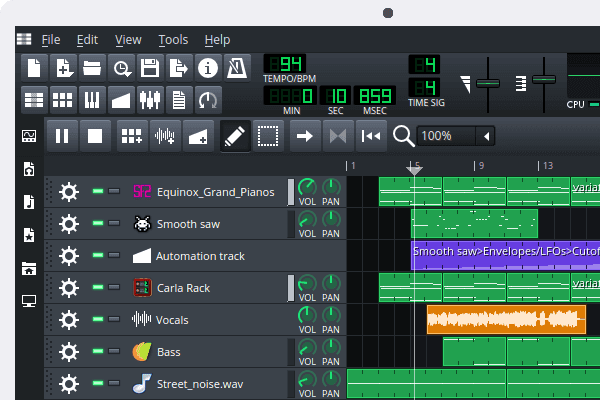
LMMS is a chiptune producer and MIDI composer that supports VST. Bosca Ceoil creates retro soundtracks with the use of basic loops. Prototyping Bitsy builds small story-based games, learning how to build core loops in a short time.
Platformer-level tiled maps, which export JSON to Godot or Phaser. The free trial versions of Aseprite such as LibreSprite are used to animate pixel art. These are linked to form entire pipelines.
Publishing and Learning Platforms
Itch.io also accepts free uploads, which have a pay-what-you-want model, and portfolios are created using it. GitHub contains projects in an open repository which encourages collaboration. Tutorials on Godot can be found in YouTube channels such as GDQuest, and official documentation can be found in step-by-step instructions.
Feedback loops exist in communities on reddits in r/gamedev and Discord. Those who start with them deliver first games in weeks, and improve their skills through an iterative process.
Free tools open up the game creation process, transforming concepts into gameplays within a short period of time.