

In 2026, HTML5 game development is flourishing, and there are more sophisticated tools to streamline the prototyping through deployment processes. These necessities enable developers to create high-performance, cross-platform games using WebGL, Canvas, and future standards of WebGPU.
Game Engines and Frameworks
Phaser is the foundation to 2D HTML5 games, including Canvas and WebGL rendering, hidden physics through Matter.js, and an enormous ecosystem of plugins. It is also lightweight and supports animations, particles and input in a way that fits arcade style titles.
Construct 3 is a no-code product, and it is possible to visual script with the help of drag-and-drop events to create a prototype quickly. It is appropriate with HTML5 exports, multiplayer, and browser-based editing, so it can be used by solo developers to create a mobile-ready experience without extensive coding.
PixiJs is used to render games that have a high number of sprites, and it provides a high frame rate with accelerated graphics. Combine it with custom physics libraries to support flexible shooters or platformers architectures.
Visual Editors and Collaboration Platforms
The PlayCanvas 3D editor is a cloud-based application that revolutionizes the development of 3D applications by allowing real-time collaboration by teams similar to collaborative live document tools. Such characteristics as entity-component systems, VR/AR, and automatic builds make complex projects faster.
Cocos Creator is a combination of visual scene creation and TypeScript scripting, which is ideal in hybrid workflows. It exports polished HTML5 bundles in its modular pipeline with taking care of animations and asset management.
Optimization and Debugging Tools
Chrome DevTools is developed with WebGPU profiling and it displays bottlenecks in shaders and draw calls. Lighthouse audits are used to guarantee mobile performance, whereas Workbox makes it easy to cache services to play offline.
Webpack 6 and Vite tree-shake and use hot module replacement to bundle assets, reducing load times. In the case of asset pipelines, TexturePacker creates HTML5 game development flourishes in 2026 with the tools that will make work processes between prototyping and deployment easier. These necessities increase productivity, performance, and cross-platform releases, both to individual developers and teams.
Phaser Framework

Phaser is the foundation of 2D HTML5 game development with Canvas and WebGL rendering. It has physics engines such as Arcade and Matter.js, which are easy to use, and a wide range of plugins, such as audio, particles, and input. Its active community and tutorials are highly lauded by developers because of its fast iteration.
Type safety in bigger projects is guaranteed by integration of TypeScript. Phaser 4 previews are more mobile optimized and modular imported, size of bundles can be reduced by up to 40%. Perfect in arcade-like games, it can be exported to browsers and progressive web apps.
Construct 3 Editor
Construct 3 is an excellent no-code visual engine, which can be used by designers who do not want to use JavaScript. Event sheets are created using drag-and-drop, not scripting, and prototyping can be created in hours. It has a browser interface, which allows offline work and export to HTML5, Android, iOS, and Steam.
Complex mechanic simulations such as pathfinding are simulated with advanced behaviors. Add-ons that are multiplayer are based on WebSockets to play in real-time. It also has speed in terms of iteration of casual games and educational projects with the assistance of AI to generate assets in updates of 2026.
PixiJS Rendering Engine
High-performance 2D rendering PixiJs is used to render thousands of sprites at 60 FPS. The overhead of WebGL is kept down, and it is therefore best suited to particle effects and scrolling worlds. Top it with custom physics to achieve custom architectures that cannot be matched by full engines.
Mobile GPUs are optimized with batch rendering and filter. In the v8 version, the adaptive resolution scaling is added, which maintains the quality of images when used on different devices. Sprite sheet tools and texture atlases reduce draw calls by a significant margin.
PlayCanvas 3D Platform
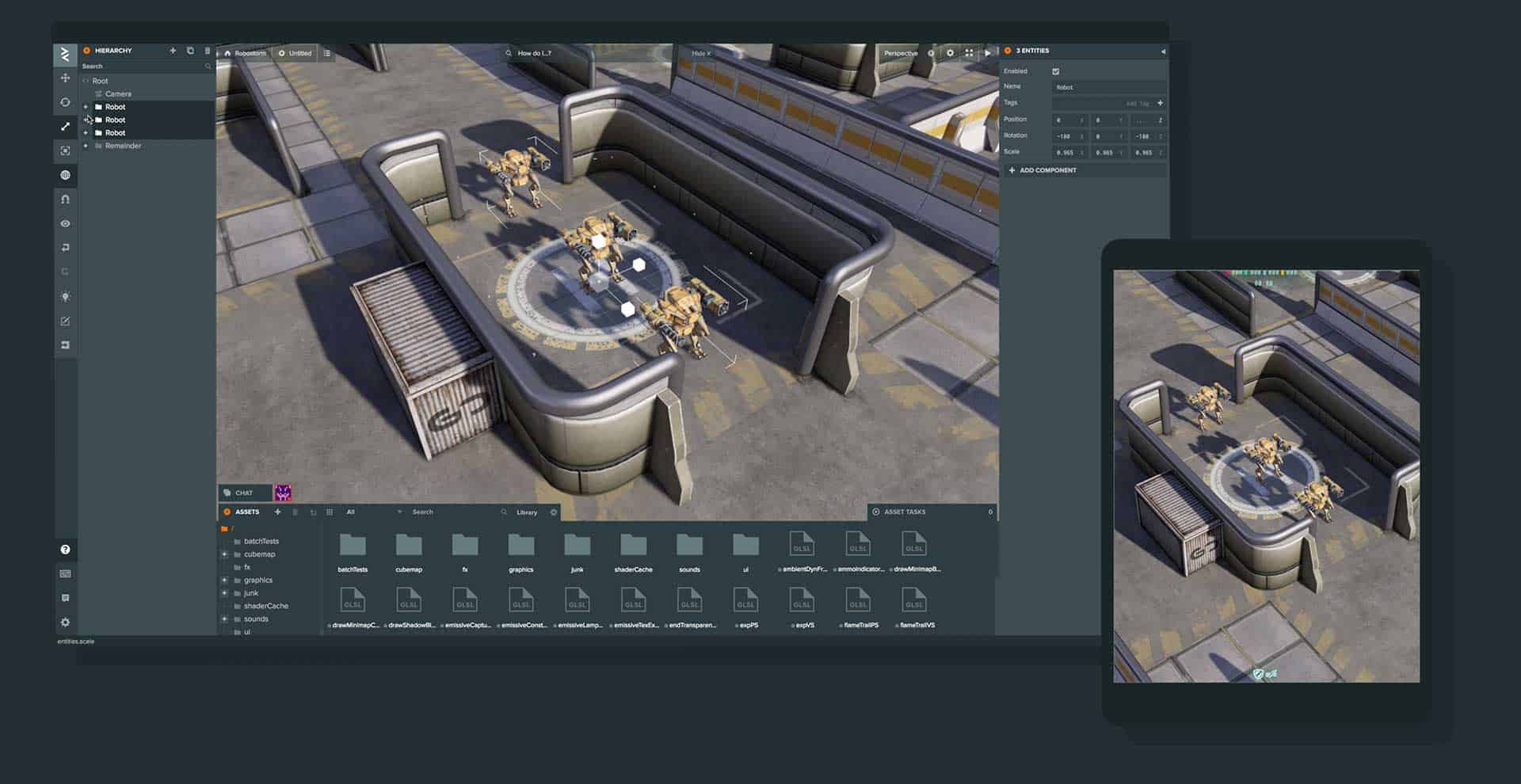
PlayCanvas is the most recent to develop 3D HTML5 and work together on clouds like live docs. Real-time editing allows teams to create glTF models and lightmaps at the same time. It has an entity-component framework that is scaled to VR/AR experiences through WebXR.
Deployments are made easier with automated asset hosting and CI/CD pipelines. The Ammo.js physics is the accurate representation of rigid bodies. Web-first title iteration times can be reduced to a fraction of the time it takes to get an instant response with browser-based previews.
Cocos Creator Suite
Cocos Creator is a combination of visual editing and TypeScript scripting of 2D/3D hybrids. Its scene graph and animation timelines are as good as the workflow of Unity. Modular builds are aimed at HTML5 with particle editors and spine support of skeletal animations.
Asset pipelines combine AI upscaling of textures of low resolution. Cross engine compatibility facilitates the process of porting of native. It has 8% market share in new HTML5 releases which is appropriate in polished mobile exports.
Debugging and Optimization Aids.
The WebGL inspector of Chrome DevTools profiles frame graphs on-the-fly. Lighthouse is post-build performance audit. Tree-shaking by webpack bundlers eliminates dead code, whereas Vite has lightning-fast HMR development.
Clean code bases are enforced by Prettier and ESLint. These tools detect memory leakages at an early stage to guarantee 60 FPS on mid-range gadgets.
The use of these tools in 2026 will enable developers to create immersive HTML5 games effectively over the ecosystems.